 how-to
Ensuring Consistent Cleaning Quality for Homes
Table of Contents
- Why Consistent Cleaning Quality Matters for Your Home
- Creating a Consistent Cleaning Schedule That Works
- Building a House Cleaning Checklist for Recurring Service
- How to Communicate Cleaning Expectations to Cleaners
- How to Evaluate Professional Cleaning Quality
- Essential Supplies and Tools for Maintaining Cleaning Standards
- Protecting Home Value and Health Through Maintenance
- Frequently Asked Questions
Last Updated: August 31, 2026
Why Consistent Cleaning Quality Matters for Your Home
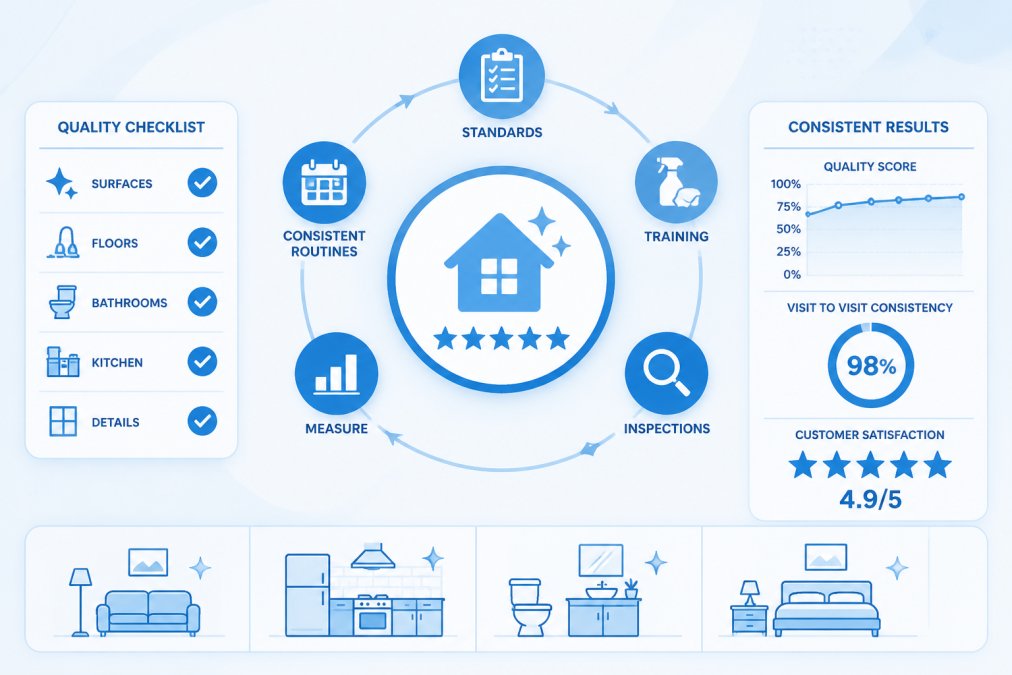
Consistent cleaning prevents buildup rather than chasing perfection. When cleaning happens on a schedule, dust doesn't accumulate in corners, bathrooms stay sanitized, and high-traffic areas maintain their appearance. Each cleaning session takes less effort than a deep clean would, and your home feels genuinely cared for.
At El Rey Cleaning Services, we understand the peace of mind that comes from knowing your home will be cleaned on a predictable schedule, with consistent standards every single time. This allows you more time for what matters.
This guide covers practical strategies for maintaining consistent cleaning quality, whether you're managing your own schedule or working with professional cleaners.
Creating a Consistent Cleaning Schedule That Works
A consistent cleaning schedule is the foundation of a clean home. Without one, cleaning becomes reactive. Match your schedule to your household's actual traffic patterns and lifestyle, then build a routine that maintains your standard without overwhelming you.
Daily Resets and High-Traffic Areas
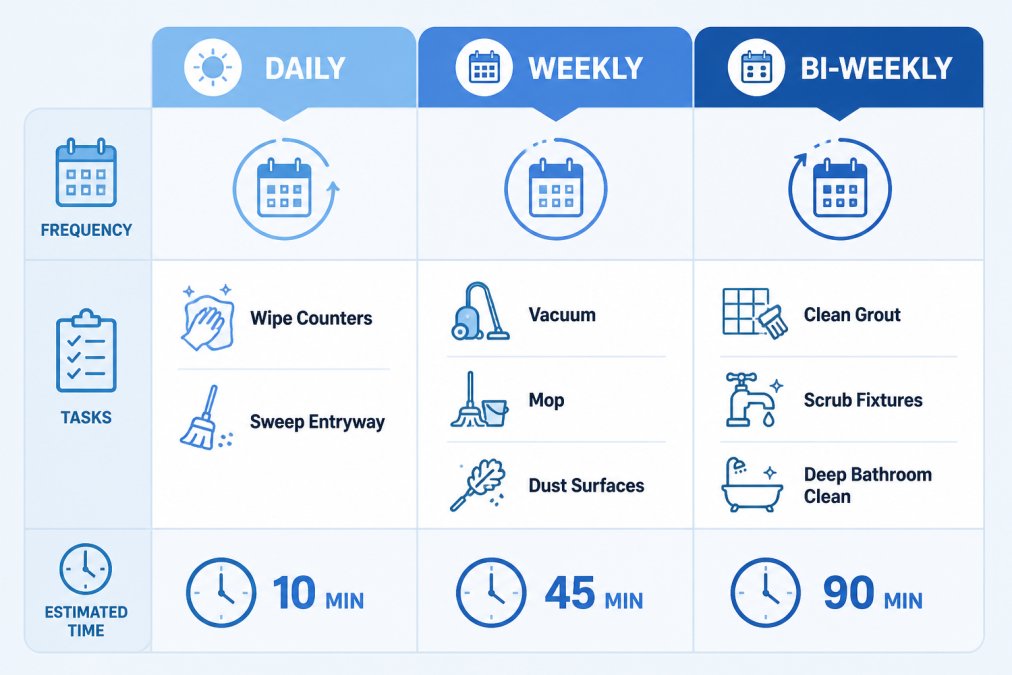
Daily resets are small, focused cleaning actions that prevent buildup in high-traffic areas. These 10-15 minute maintenance tasks include wiping kitchen counters after meals, sweeping the entryway, and quick bathroom sink clean-ups. Daily resets also include putting things back where they belong, clutter management is part of cleaning consistency.
For bathrooms, a daily rinse of the sink and mirror wipe prevents soap scum and water spots from hardening. For kitchens, wiping counters and the stovetop after cooking prevents grease buildup that becomes much harder to remove later.
Weekly and Bi-Weekly Routines
Weekly cleaning targets surfaces that need attention more frequently than daily but not constantly:
- Vacuuming all carpeted and rugged areas
- Mopping hard floors
- Dusting surfaces, shelves, and baseboards
- Cleaning mirrors and windows
- Wiping down appliances
- Cleaning light switches and door handles
Bi-weekly tasks include cleaning inside the refrigerator, scrubbing grout, deep-cleaning bathroom fixtures, and wiping down walls. This frequency prevents buildup from becoming overwhelming.
Building a House Cleaning Checklist for Recurring Service
A detailed checklist ensures nothing gets missed and gives cleaners clear expectations about what "done" actually means.
What to Include in Your Checklist
Break down each room and list specific tasks with enough detail that someone unfamiliar with your home knows exactly what you expect. For example, "clean the kitchen" is vague; "wipe down cabinet fronts, clean the stovetop, scrub the sink, and wipe the counters" is clear.
List tasks in logical order for each room. Include specific areas that are easy to overlook: baseboards, light switches, door handles, and ceiling fan tops. Note any surfaces requiring special care and specify frequency for each task, some happen every visit while others happen weekly, bi-weekly, or monthly.
Tracking Progress and Adjusting as Needed
Have the cleaner check off items as they complete them or take photos of key areas before and after each visit. Photos provide objective evidence that work was completed to standard.
Review your checklist monthly. Are there tasks consistently missed? Add them earlier in the sequence or break them into smaller steps. Are there tasks that don't need to happen as often? Adjust the frequency. A checklist should evolve based on what you learn about your home's actual needs.
How to Communicate Cleaning Expectations to Cleaners
The gap between what you expect and what you receive often comes down to communication. Start with a detailed conversation before the first cleaning, walking through your home and pointing out priorities. Show special requirements, surfaces needing gentle handling, and preferred products.
Provide your checklist in writing. A one-page checklist is far better than relying on verbal instructions. Be specific about what "clean" means for different surfaces. Establish a feedback loop after the first few visits to discuss what's working and what needs adjustment.
Document any issues promptly. If something wasn't cleaned to your satisfaction, mention it right away rather than letting frustration build. Frame it as clarification: "I noticed the baseboards weren't wiped down, that's important to me. Can we make sure that happens every visit?"
How to Evaluate Professional Cleaning Quality
Evaluating cleaning quality consistently prevents small issues from becoming big problems.
Inspecting for Thoroughness and Attention to Detail
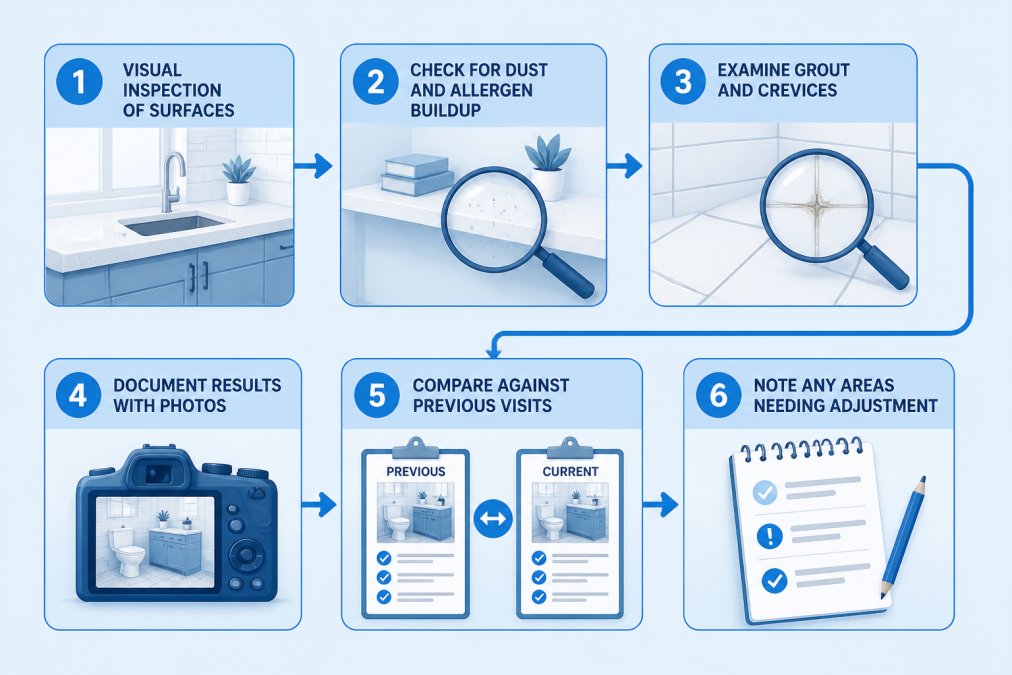
Walk through each room immediately after cleaning and look at surfaces from multiple angles. Check baseboards, shelves, and surfaces at eye level and below. Run your finger along baseboards, windowsills, and door frame tops, if dust comes off, the cleaner missed those areas.
For bathrooms, check grout lines, tile corners, and the area around the toilet base. In the kitchen, check inside the microwave, stovetop, and cabinet fronts. These details show whether cleaning was comprehensive or just surface-level.
Measuring Consistency Over Time
Take photos after each cleaning to create a visual record. Compare photos from visit one, visit five, and visit ten. Are surfaces staying cleaner? Keep notes on any issues you notice. If the same area is consistently missed, that's a pattern worth addressing.
Ask yourself whether the home feels healthier. If anyone has allergies, do symptoms improve with regular professional cleaning? Communicate your observations, if quality is declining, mention it before it becomes a bigger problem. If quality is consistently excellent, acknowledge that too.
Essential Supplies and Tools for Maintaining Cleaning Standards
Microfiber cloths capture dust and allergens rather than spreading them around. Vacuums with HEPA filtration capture fine particles that basic vacuums recirculate (the EPA). For hard floors, microfiber mop systems outperform traditional mops and require less water.
Cleaning products should match your surfaces and preferences. For bathrooms, a good grout brush and stiff-bristled toilet brush reach areas that sponges can't adequately clean. Store supplies in an organized location so cleaners can access what they need without searching.
Protecting Home Value and Health Through Maintenance
Consistent cleaning is an investment in both your health and your home's long-term value. Dust and grime left on surfaces damage finishes over time. Regular vacuuming with HEPA filters, dusting with microfiber cloths, and professional cleaning reduce allergen levels significantly (peer-reviewed research).
High-touch surfaces like door handles, light switches, and remote controls are vectors for bacteria and viruses (the CDC). Consistent cleaning and disinfection reduce transmission. Living in a consistently clean space reduces stress and improves mental health, the daily reset of coming home to an organized, clean environment creates a sense of calm.
Maintaining consistent cleaning quality requires a schedule, a detailed checklist, clear communication, and realistic evaluation. When you commit to consistency, your home stays healthier, your belongings last longer, and the burden of "I should clean" simply goes away.
If managing your own schedule feels overwhelming, professional service becomes valuable. El Rey Cleaning Services understands that consistency matters, which is why we provide reliable, thorough service with a commitment to consistent cleaning standards on every visit. We provide the gift of time by handling the work reliably, so you can focus on what actually matters. Call for a free estimate and see how consistent professional cleaning can transform your home.
Frequently Asked Questions
Q: How often should professional cleaners visit to maintain consistency?
Most homes benefit from weekly or bi-weekly professional cleaning visits to maintain consistent cleaning quality. Weekly service works best for high-traffic households or those with pets and children. Bi-weekly visits suit smaller homes or those with fewer occupants. The right frequency depends on your household size, lifestyle, and budget. A professional cleaning service can help you determine the ideal schedule during your free estimate consultation.
Q: What should be included in a house cleaning checklist for recurring service?
Your checklist should cover daily resets (tidying and light dusting), weekly deep cleaning (bathrooms, kitchens, floors), and bi-weekly tasks (baseboards, windows, appliance interiors). Include specific areas like high-traffic zones, kitchens, bathrooms, and bedrooms. Document surface types and any special care requirements. Share this checklist with your cleaning service so they understand your expectations. Update it quarterly as your needs change.
Q: How do I know if my cleaners are actually being thorough and consistent every visit?
Inspect key areas like baseboards, corners, under furniture, and bathroom grout after each visit. Take photos to track consistency over time. Check for dust on surfaces, allergen buildup, and disinfecting effectiveness. Communicate directly with your cleaning team about any missed spots. A reliable service responds promptly to feedback and makes corrections immediately. Consistent quality means the same standard is met every single visit, not just occasionally.
Q: What is the best way to communicate cleaning expectations to cleaners?
Provide a written checklist detailing specific tasks, problem areas, and material care instructions. Be clear about which surfaces need disinfecting versus light dusting. Point out high-traffic areas that need extra attention. Schedule a walk-through before the first visit if possible. Use photos to show your standards and preferred results. Keep communication open by noting any changes or new concerns promptly. Professional cleaners appreciate clear expectations and deliver better results when they understand your priorities.
This article was written using GrandRanker
Frequently Asked Questions
Q: How often should professional cleaners visit to maintain consistency?
Most homes benefit from weekly or bi-weekly professional cleaning visits to maintain consistent cleaning quality. Weekly service works best for high-traffic households or those with pets and children. Bi-weekly visits suit smaller homes or those with fewer occupants. The right frequency depends on your household size, lifestyle, and budget. A professional cleaning service can help you determine the ideal schedule during your free estimate consultation.
Q: What should be included in a house cleaning checklist for recurring service?
Your checklist should cover daily resets (tidying and light dusting), weekly deep cleaning (bathrooms, kitchens, floors), and bi-weekly tasks (baseboards, windows, appliance interiors). Include specific areas like high-traffic zones, kitchens, bathrooms, and bedrooms. Document surface types and any special care requirements. Share this checklist with your cleaning service so they understand your expectations. Update it quarterly as your needs change.
Q: How do I know if my cleaners are actually being thorough and consistent every visit?
Inspect key areas like baseboards, corners, under furniture, and bathroom grout after each visit. Take photos to track consistency over time. Check for dust on surfaces, allergen buildup, and disinfecting effectiveness. Communicate directly with your cleaning team about any missed spots. A reliable service responds promptly to feedback and makes corrections immediately. Consistent quality means the same standard is met every single visit, not just occasionally.
Q: What is the best way to communicate cleaning expectations to cleaners?
Provide a written checklist detailing specific tasks, problem areas, and material care instructions. Be clear about which surfaces need disinfecting versus light dusting. Point out high-traffic areas that need extra attention. Schedule a walk-through before the first visit if possible. Use photos to show your standards and preferred results. Keep communication open by noting any changes or new concerns promptly. Professional cleaners appreciate clear expectations and deliver better results when they understand your priorities.