 ultimate-guide
Commercial Office Cleaning: A 2026 Guide
Table of Contents
- What Commercial Office Cleaning Actually Covers
- Commercial Cleaning Cost per Square Foot: What Drives Pricing
- Janitorial Services Checklist for Facility Managers
- Commercial Cleaning Frequency: How Often Is Often Enough
- Post-Pandemic Hygiene Standards Every Office Should Meet
- Green Cleaning and Sustainability ROI for Commercial Spaces
- Contract Negotiation Tips for Commercial Office Cleaning Agreements
- Frequently Asked Questions
Last Updated: August 27, 2026
What Commercial Office Cleaning Actually Covers
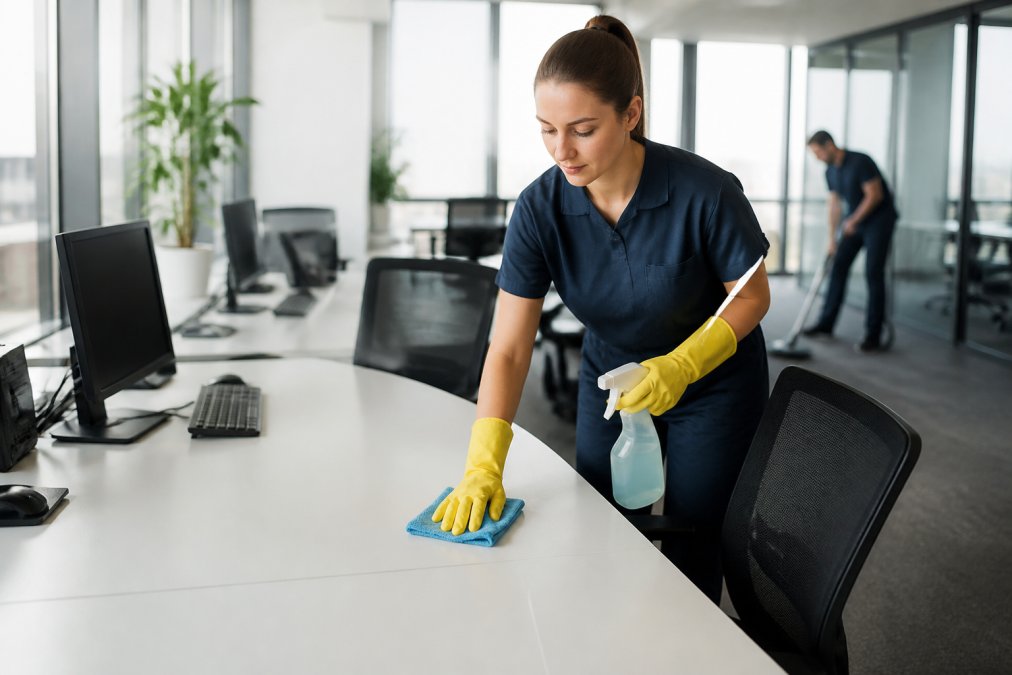
Commercial office cleaning is a professional service that maintains the cleanliness, hygiene, and overall condition of business workplaces on a scheduled or as-needed basis. At El Rey Cleaning Services, we work with office managers and facility teams who are often surprised by how much falls under this umbrella. It goes beyond emptying trash cans and wiping desks.
A full-scope commercial cleaning program typically covers:
- Dusting and surface wiping on workstations, shelving, and common areas
- Restroom sanitation and restocking of supplies
- Floor care including vacuuming, mopping, and periodic floor stripping and waxing
- Window cleaning on interior glass and accessible exterior surfaces
- Waste removal and recycling management
- Kitchen and break room cleaning
- High-touch surface disinfecting on door handles, light switches, and shared equipment
The scope depends entirely on your facility's size, use, and industry. A law firm has different needs than a medical clinic. A co-working space turns over differently than a private corporate office. That's why a customized scope of work matters more than any one-size-fits-all package.
Janitorial Services vs. Commercial Cleaning: A Clear Distinction
Janitorial services refer to routine, recurring maintenance tasks performed daily or weekly: emptying bins, cleaning restrooms, mopping floors, and keeping common areas tidy. Commercial cleaning is the broader category that includes janitorial work but also covers specialized services like carpet cleaning, deep sanitizing, post-construction cleanup, and floor stripping and waxing.
Think of janitorial services as the ongoing baseline and commercial cleaning as the full spectrum of what professional teams can deliver. Many businesses need both. The distinction matters when you're negotiating a service agreement, because bundling deep-clean services with routine janitorial work affects your contract structure and pricing.
Commercial Cleaning Cost per Square Foot: What Drives Pricing
Pricing for commercial office cleaning varies significantly based on several interconnected factors. There is no universal rate, and any provider quoting a flat price without assessing your space is cutting corners somewhere. According to the Building Service Contractors Association International industry resources, square footage is the most common pricing baseline, but it's rarely the only variable.
The factors that drive your actual cost include:
- Square footage: Larger spaces cost more in total, though the per-square-foot rate often decreases at scale
- Cleaning frequency: Daily service costs more than weekly, but the per-visit rate is typically lower
- Scope of work: Restroom sanitation, carpet cleaning, and floor stripping and waxing add to the base rate
- Facility type: Medical offices and food-service environments require stricter protocols and commercial-grade equipment
- Access and hours: After-hours cleaning or restricted-access facilities increase labor costs
- Geographic market: Labor costs vary by region and affect what providers charge
For accurate pricing on your space, request a walkthrough quote rather than relying on online estimates. At El Rey Cleaning Services, we provide one clear price upfront with no hidden fees, so you know exactly what you're paying before any work begins.
| Cost Factor | Impact on Pricing | What to Ask Your Provider |
|---|---|---|
| Square footage | Primary baseline | Rate per sq ft at your volume |
| Cleaning frequency | Higher frequency = lower per-visit rate | Weekly vs. bi-weekly comparison |
| Scope of services | Deep cleans add cost | Itemized vs. bundled pricing |
| Facility type | Medical/food = higher protocols | Industry-specific experience |
| After-hours access | Increases labor cost | Standard vs. after-hours rate |
Janitorial Services Checklist for Facility Managers
Most facility managers underestimate how much a structured checklist improves service accountability. Without one, you're relying entirely on the provider's judgment, and that's where missed spots accumulate.
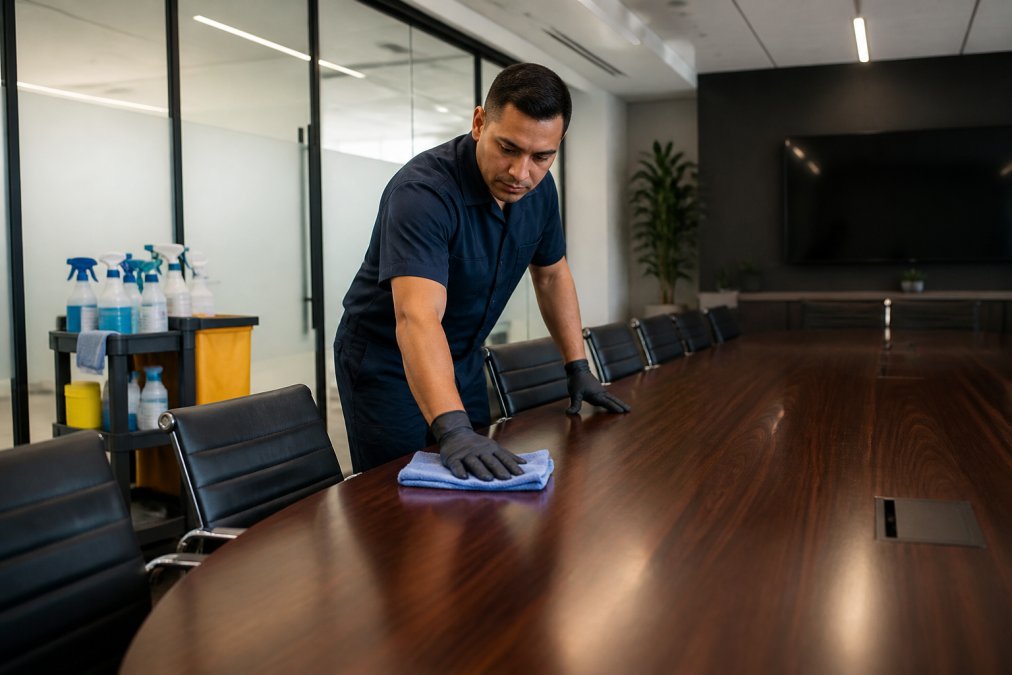
Use this checklist to evaluate your current service or set expectations with a new provider.
Daily tasks:
- Empty all trash and recycling bins
- Wipe down high-touch surfaces: door handles, elevator buttons, light switches
- Clean and sanitize restrooms, restock paper products and soap
- Vacuum carpeted areas and mop hard floors in high-traffic zones
- Wipe down kitchen counters, sinks, and appliance exteriors
- Remove visible debris from entryways and lobbies
Weekly tasks:
- Dust workstations, shelving, blinds, and ceiling vents
- Clean interior glass and partition surfaces
- Deep-clean break room appliances (microwave, refrigerator exterior)
- Sanitize shared equipment: copiers, phone handsets, conference room remotes
- Spot-clean upholstered furniture
Monthly or quarterly tasks:
- Floor stripping and waxing on hard surface floors
- Carpet cleaning with commercial-grade equipment
- Window cleaning on interior and accessible exterior surfaces
- HEPA filtration vacuuming in high-dust areas
- Grout cleaning in restrooms and kitchens
High-Touch Surfaces and Restroom Sanitation
High-touch surfaces are the highest-risk areas for cross-contamination in any office environment. The CDC guidance on cleaning and disinfecting facilities identifies door handles, shared keyboards, faucet handles, and elevator buttons as priority surfaces that require disinfecting, not just wiping.
Restroom sanitation goes beyond visible cleanliness. Professional janitors treat toilets, urinals, sinks, and floors with disinfectants rated to eliminate pathogens. Dispensers are checked and restocked, mirrors are polished, and floors are mopped with a fresh solution, not recycled water from a previous area. Cross-contamination between restroom cleaning tools and other areas is a non-negotiable boundary in professional janitorial services.
Floor Care: Stripping, Waxing, and Carpet Cleaning
Floor care is where the difference between a basic janitorial contract and a true commercial cleaning program becomes visible. Hard floors accumulate scuff marks, wax buildup, and embedded grime that daily mopping cannot address. Floor stripping removes old wax layers completely, and re-waxing restores the protective finish that extends floor life.
Carpet cleaning in commercial spaces requires truck-mounted or commercial-grade extraction equipment, not the consumer machines available at hardware stores. Hot water extraction removes allergens, bacteria, and embedded soil that contribute to poor indoor air quality. Many facility managers schedule carpet cleaning quarterly or semi-annually as part of preventative maintenance.
Commercial Cleaning Frequency: How Often Is Often Enough
The right commercial cleaning frequency depends on your occupancy level, industry requirements, and the nature of work performed in your space. There is no universal answer, but there are clear benchmarks.
- Daily cleaning is standard for offices with 50 or more occupants, high-traffic lobbies, medical facilities, and any space with food preparation areas
- Three times per week works well for mid-size offices with moderate foot traffic and no specialized hygiene requirements
- Weekly service suits smaller offices, storage facilities, or spaces where most work is remote
- Bi-weekly or monthly deep cleans supplement regular janitorial services for larger facilities
The biggest mistake facility managers make is setting a cleaning frequency based on budget alone, then discovering that occupational health complaints or client-facing appearance issues cost more in the long run. According to OSHA guidance on workplace sanitation standards, employers are required to maintain sanitary workplace conditions, which means cleaning frequency must match actual use, not just preference.
A good service agreement builds frequency reviews into the contract so adjustments can be made as your occupancy or operations change.
Post-Pandemic Hygiene Standards Every Office Should Meet
The baseline for workplace hygiene shifted permanently after 2020. Offices that once cleaned surfaces weekly now maintain daily disinfecting protocols, and many have adopted technologies that were previously reserved for healthcare settings.
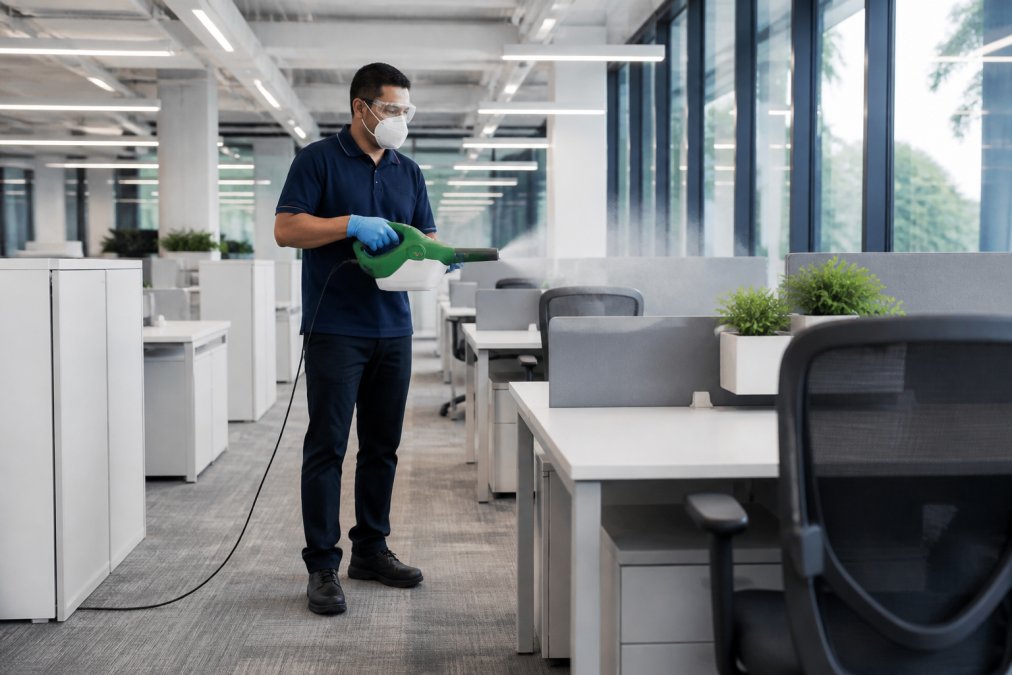
Every commercial office should now meet these minimum standards:
- Daily high-touch surface disinfection using EPA-registered disinfectants with verified kill claims
- Documented cleaning logs that verify what was cleaned, when, and with what products
- Restroom sanitation at minimum twice daily in occupied buildings
- Clear protocols for post-illness cleaning when an employee reports illness
The EPA's list of registered disinfectants for use against pathogens is the authoritative reference for verifying that the products your cleaning provider uses are actually effective. Ask your provider which list their products appear on. If they can't answer, that's a red flag.
Electrostatic spraying can be effective in conference rooms, waiting areas, and shared workspaces where manual wiping cannot reach every surface angle.
Green Cleaning and Sustainability ROI for Commercial Spaces
Green cleaning is not just an environmental preference. It has measurable business implications that facility managers are increasingly factoring into procurement decisions.
Green-seal certified products and processes reduce chemical exposure for building occupants and cleaning staff, which translates to fewer occupational health incidents and better indoor air quality. Improved indoor air quality has a documented relationship with employee productivity and reduced sick days, which carries real financial weight when you calculate it against your cleaning contract cost.
The sustainability ROI case for green cleaning includes:
- Reduced chemical disposal costs because concentrated, dilutable green products generate less waste
- Lower liability exposure from fewer harsh chemical incidents on-site
- Tenant and employee satisfaction in buildings where occupants are aware of cleaning practices
- Alignment with corporate sustainability reporting requirements that are increasingly standard for mid-size and large companies
What most guides miss about green cleaning is that the transition does not require sacrificing disinfection effectiveness. Many green-seal certified disinfectants meet the same EPA efficacy standards as conventional products. The distinction is in the formulation, not the performance.
When evaluating providers, ask specifically whether they use green-seal certified or equivalent products, and whether their cleaning protocols are designed to minimize chemical runoff and packaging waste. A provider who can answer those questions in detail understands the difference between marketing language and actual practice.
Contract Negotiation Tips for Commercial Office Cleaning Agreements
A cleaning contract is not just a price agreement. It is a service accountability document, and most businesses sign contracts that are far too vague to protect them when service quality slips.
Here is what a well-negotiated commercial office cleaning agreement should include:
1. A detailed scope of work. Every task, every area, and every frequency should be written out explicitly. "General cleaning" is not a scope of work.
2. Frequency and scheduling terms. Specify not just how often, but what time windows are acceptable, whether after-hours access is required, and what happens if a scheduled visit is missed.
3. Performance standards and inspection rights. Include the right to conduct walkthroughs or request documented cleaning logs. Some agreements include a quality scoring system tied to service continuation.
4. Substitution and staffing policies. Know whether the provider uses consistent assigned staff or rotating crews. Consistency matters for security and for maintaining cleaning standards.
5. Product disclosure. Require disclosure of the cleaning products used, particularly if you have occupants with chemical sensitivities or if green-seal certified products are a requirement.
6. Termination and amendment clauses. Avoid long lock-in periods without performance-based exit options. A 30-day termination clause with notice is reasonable for most commercial cleaning contracts.
7. Liability and insurance verification. Confirm the provider carries general liability and workers' compensation insurance. Request certificates, not just verbal confirmation.
The biggest use point in negotiation is often scope, not price. Narrowing the scope to your actual priorities and building in quarterly reviews gives you more control than simply pushing for a lower rate on a vague contract.
Maintaining a clean, hygienic office is harder than it looks when you're managing it without the right partner. El Rey Cleaning Services brings reliable, consistent commercial office cleaning to businesses that need results they can count on, with transparent pricing and no hidden fees. Our team shows up on schedule, follows a thorough scope of work, and communicates clearly so facility managers aren't left guessing. Call for a free estimate and find out what a dependable cleaning partner actually looks like.
Frequently Asked Questions
Q: What is included in a standard commercial office cleaning service?
A: A standard commercial office cleaning service typically covers dusting and wiping workstations, emptying trash and waste removal, vacuuming carpets, mopping hard floors, restroom sanitation, and cleaning high-touch surfaces like door handles, light switches, and shared equipment. Depending on the service agreement, it may also include window cleaning, floor stripping and waxing, and carpet deep cleaning. A customized scope of work lets you add or remove tasks based on your facility's specific needs and cleaning frequency.
Q: How much does commercial office cleaning cost per square foot?
A: Commercial cleaning cost per square foot varies based on factors like building size, cleaning frequency, the scope of work, and local labor rates. Larger facilities generally pay a lower per-square-foot rate because fixed setup costs spread across more area. Specialty tasks such as floor stripping and waxing, HEPA filtration vacuuming, or electrostatic spraying add to the base rate. For an accurate figure, request a site walkthrough and written quote from your provider rather than relying on online averages.
Q: How often should a professional office be deep cleaned?
A: Most offices benefit from a professional deep clean at least once or twice per year, on top of regular janitorial visits. High-traffic spaces, medical or clinic environments, and facilities with food preparation areas may need quarterly deep cleans. Factors like employee headcount, foot traffic from visitors, and post-pandemic hygiene standards all influence the right commercial cleaning frequency. A reputable provider will assess your space and recommend a schedule that keeps occupational health risks low without over-servicing.
Q: What is the difference between janitorial services and commercial cleaning?
A: Janitorial services focus on routine, ongoing maintenance tasks completed during or after business hours: emptying bins, mopping floors, restocking restroom supplies, and keeping common areas tidy. Commercial cleaning typically refers to deeper, less frequent work like carpet cleaning, floor stripping and waxing, window cleaning, and sanitizing protocols that go beyond daily upkeep. Many providers offer both under a single service agreement, giving facility managers one point of contact for all building maintenance needs.
This article was written using GrandRanker
Frequently Asked Questions
Q: What is included in a standard commercial office cleaning service?
A: A standard commercial office cleaning service typically covers dusting and wiping workstations, emptying trash and waste removal, vacuuming carpets, mopping hard floors, restroom sanitation, and cleaning high-touch surfaces like door handles, light switches, and shared equipment. Depending on the service agreement, it may also include window cleaning, floor stripping and waxing, and carpet deep cleaning. A customized scope of work lets you add or remove tasks based on your facility's specific needs and cleaning frequency.
Q: How much does commercial office cleaning cost per square foot?
A: Commercial cleaning cost per square foot varies based on factors like building size, cleaning frequency, the scope of work, and local labor rates. Larger facilities generally pay a lower per-square-foot rate because fixed setup costs spread across more area. Specialty tasks such as floor stripping and waxing, HEPA filtration vacuuming, or electrostatic spraying add to the base rate. For an accurate figure, request a site walkthrough and written quote from your provider rather than relying on online averages.
Q: How often should a professional office be deep cleaned?
A: Most offices benefit from a professional deep clean at least once or twice per year, on top of regular janitorial visits. High-traffic spaces, medical or clinic environments, and facilities with food preparation areas may need quarterly deep cleans. Factors like employee headcount, foot traffic from visitors, and post-pandemic hygiene standards all influence the right commercial cleaning frequency. A reputable provider will assess your space and recommend a schedule that keeps occupational health risks low without over-servicing.
Q: What is the difference between janitorial services and commercial cleaning?
A: Janitorial services focus on routine, ongoing maintenance tasks completed during or after business hours: emptying bins, mopping floors, restocking restroom supplies, and keeping common areas tidy. Commercial cleaning typically refers to deeper, less frequent work like carpet cleaning, floor stripping and waxing, window cleaning, and sanitizing protocols that go beyond daily upkeep. Many providers offer both under a single service agreement, giving facility managers one point of contact for all building maintenance needs.