 how-to
How to Clean a Stainless Steel Pan: Full Guide
Table of Contents
- What You'll Need Before You Start
- Daily Routine to Clean a Stainless Steel Pan
- How to Remove Burnt Food from Stainless Steel
- Is Bar Keepers Friend Safe for Stainless Steel?
- How to Prevent Rainbow Stains on Stainless Steel
- Hard Water Stains, Mineral Deposits, and Water Quality
- Restoring Shine and What to Avoid When Cleaning Stainless Steel Pans
- Common Mistakes to Avoid
- Frequently Asked Questions
Last Updated: August 26, 2026
Stainless steel pans are durable cookware, but only if cleaned correctly. Scorched residue, rainbow discoloration, and cloudy mineral deposits are fixable, but steel wool or bleach cause permanent damage.
This guide covers cleaning stainless steel pans for every situation: daily routine, burnt-on food, rainbow stains, hard water buildup, and restoring shine. We'll explain what works, what doesn't, and the mistakes that shorten your cookware's life. Water quality and stovetop type both affect how your pan looks over time.
What You'll Need Before You Start
Using the wrong tool can scratch stainless steel permanently. Gather supplies before starting.
Essential supplies:
- Dish detergent (non-bleach)
- Baking soda
- White vinegar
- Nylon scrubber or nylon-bristle brush
- Non-abrasive sponge
- Microfiber cloth or soft dish towel
- Bar Keepers Friend (powdered or liquid)
- Warm to hot water
Optional for deeper cleaning:
- Soft-bristle bottle brush for curved edges
- Stainless steel polish or mineral oil for exterior shine
The grain of stainless steel runs in one direction. Always scrub with the grain, not against it or in circles. Scrubbing against the grain creates micro-scratches that dull the finish and trap residue.
According to the American Iron and Steel Institute's guidance on stainless steel care, stainless steel's corrosion resistance comes from a thin chromium oxide layer. Harsh chemicals and abrasive tools break down that layer, making the "what not to use" list as important as the cleaning method itself.
Daily Routine to Clean a Stainless Steel Pan
Consistent daily routines prevent most damage. Most harm comes from skipping steps or rushing, not from heavy cooking.
Step 1: Let the Pan Cool First
Never plunge a hot stainless steel pan into cold water. Thermal shock causes warping, a permanent deformation that makes the pan sit unevenly on the burner. This is especially damaging to multi-ply cladding construction, where repeated thermal shock can separate the bonded layers.
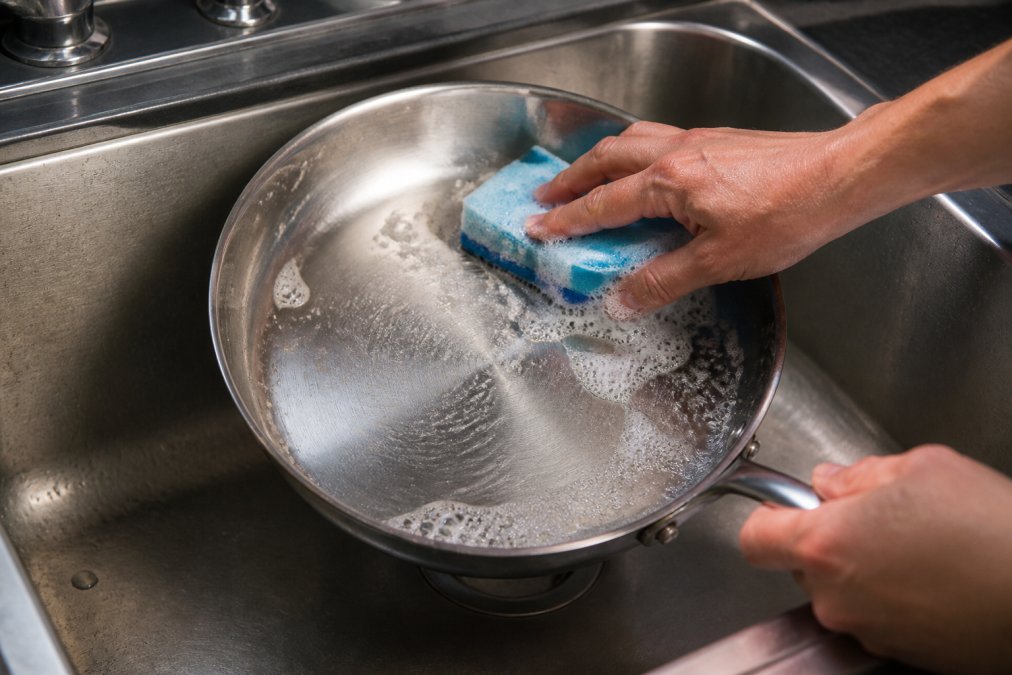
Step 2: Wash with Dish Detergent and a Nylon Scrubber
Add a few drops of dish detergent to the pan with warm water. Use a nylon scrubber to clean the interior in straight strokes, following the grain. For everyday residue, this is sufficient.
For light stuck-on food, fill the pan with an inch of warm water, add a drop of detergent, and soak for five to ten minutes before scrubbing.
Step 3: Dry Immediately with a Microfiber Cloth
This step is critical and often skipped. After rinsing, dry immediately with a microfiber cloth or clean dish towel. Air-drying leaves dissolved minerals from tap water, creating white spots or cloudy film. Microfiber works better than paper towels because it absorbs water without leaving lint or micro-scratches.
How to Remove Burnt Food from Stainless Steel
Burnt-on residue is the most common reason people abandon stainless steel cookware. Scorched food almost always comes off without abrasive tools using the right method.
Baking Soda Paste Method
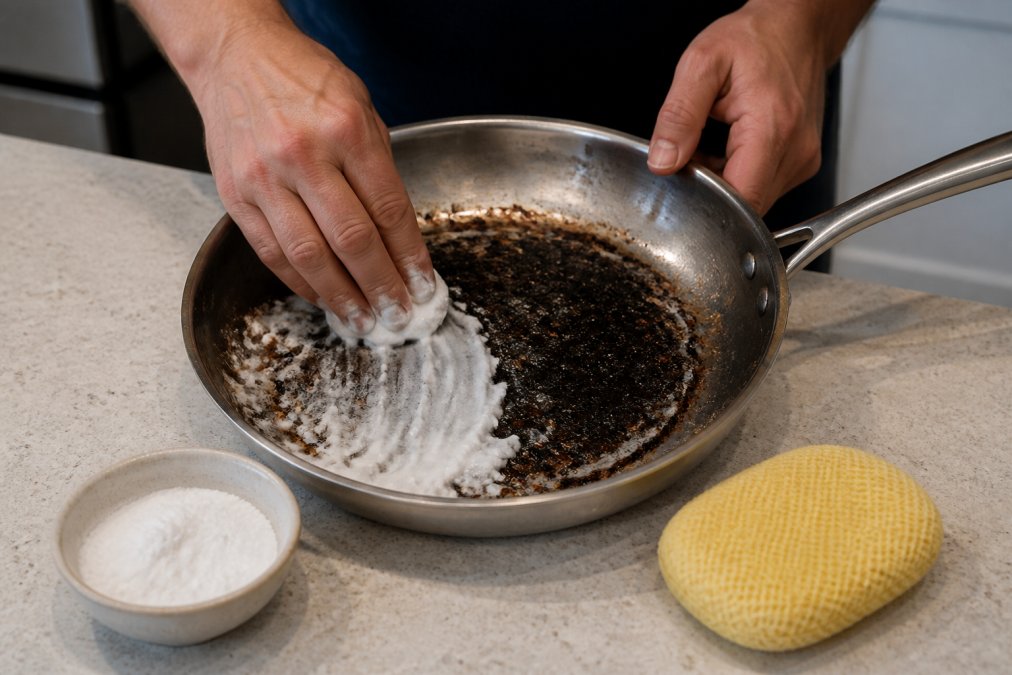
The baking soda paste method works well for localized burnt spots and moderate scorching.
How to do it:
- Let the pan cool completely.
- Rinse out loose debris.
- Sprinkle baking soda over the burnt area.
- Add just enough water to form a thick paste.
- Let sit for 15 to 20 minutes (up to an hour for heavy scorching).
- Scrub with a nylon scrubber using straight strokes along the grain.
- Rinse thoroughly and dry immediately.
For stubborn spots, add a small splash of white vinegar to the paste after it sits. The fizzing reaction helps lift burnt residue. Rinse completely before drying.
Soak and Simmer Method for Scorched Residue
Use the soak and simmer method for heavy, widespread scorched residue covering most of the cooking surface.
How to do it:
- Fill the pan with enough water to cover the scorched area.
- Add two tablespoons of baking soda.
- Place on the stovetop and bring to a simmer (not a rolling boil).
- Simmer for 10 to 15 minutes. Burnt residue will loosen and float.
- Remove from heat and let cool until safe to handle.
- Pour out water and use a nylon scrubber to remove remaining residue.
- Wash with dish detergent, rinse, and dry.
Heat rehydrates burnt material and baking soda breaks down the carbon bonds holding it to the steel. No scrubbing force required.
Is Bar Keepers Friend Safe for Stainless Steel?
Bar Keepers Friend is safe for stainless steel and highly effective for removing stubborn stains, discoloration, and oxidation. The active ingredient is oxalic acid, which dissolves mineral deposits and rust without scratching the surface when used correctly.
Wet the pan surface, sprinkle a small amount of Bar Keepers Friend powder (or apply the liquid formula), and gently rub with a damp non-abrasive sponge in the direction of the grain. Rinse thoroughly, oxalic acid should not remain on the surface. Dry immediately.
Important caveats:
- Do not let Bar Keepers Friend sit on the pan for more than one minute. Extended contact dulls the finish.
- Do not use it on the interior cooking surface daily. Reserve it for stubborn stains.
- Always rinse completely before cooking.
According to NSF International's guidance on cookware cleaning products, cleaning products used on food-contact surfaces should be fully rinsed away before use. Bar Keepers Friend is NSF-rated for food-contact surfaces when used as directed.
How to Prevent Rainbow Stains on Stainless Steel
Rainbow stains, iridescent blue, gold, and purple patches, result from heat tint, a form of oxidation when the pan gets too hot too fast or is heated empty. This is not structural damage but affects appearance. Heat tint is preventable and reversible.
How to prevent rainbow discoloration:
- Preheat on low to medium heat, not high. Stainless steel distributes heat well, especially with multi-ply cladding.
- Never heat an empty pan for extended periods. Add oil or liquid before the pan gets too hot.
- Match burner size to pan size. A small pan on a large burner concentrates heat at edges.
How to remove existing rainbow stains:
White vinegar is the most effective natural solution. Pour undiluted white vinegar onto the stained area, let sit for a few minutes, then wipe with a soft cloth and rinse. Bar Keepers Friend also removes heat tint reliably.
Rainbow stains return if you don't change the heating habit that caused them. Lower heat and no dry preheating keep stains gone.
Hard Water Stains, Mineral Deposits, and Water Quality
Hard water significantly affects how stainless steel cookware looks over time. High mineral content (calcium and magnesium) leaves white deposits every time water evaporates. Over time, these build into a cloudy film that regular dish detergent doesn't remove.
According to the U.S. Geological Survey's water hardness data, a large portion of the country has moderately hard to very hard water. Mineral buildup on cookware is inevitable without proper maintenance.
To remove hard water stains and mineral deposits:
- Fill the pan with equal parts white vinegar and water.
- Bring to a simmer for five minutes.
- Let cool, then pour out the solution.
- Wash with dish detergent, rinse, and dry immediately.
White vinegar's acidity dissolves calcium and magnesium deposits without harming the steel.
Induction vs. gas stovetop considerations:
Induction stovetops heat the pan from the base up through magnetic induction, providing even, controlled heat distribution. This reduces heat tint and localized scorching risk. Gas stovetops concentrate heat at the center and can leave carbonized residue on the exterior from the open flame.
For gas stovetop users: clean the exterior base regularly with baking soda paste. Carbon buildup hardens the longer it sits.
Restoring Shine and What to Avoid When Cleaning Stainless Steel Pans
The surface finish gives stainless steel its distinctive appearance and is what most people accidentally damage. Restoring shine is straightforward once you know the method.
Polishing the Surface Finish
For a clean pan that looks its best, polish after cleaning and drying.
Apply a small amount of mineral oil or dedicated stainless steel polish to a clean microfiber cloth. Rub it into the surface in the direction of the grain. Buff with a dry section of the cloth to remove excess. This seals the surface, reduces water spot sticking, and restores reflective quality.
Skip polish on the interior cooking surface. Mineral oil can affect flavor and smoke at high temperatures.
| Cleaning Task | Best Tool | What to Avoid |
|---|---|---|
| Daily washing | Nylon scrubber + dish detergent | Steel wool, metal pads |
| Burnt-on food | Baking soda paste or simmer method | Bleach, abrasive powder |
| Rainbow discoloration | White vinegar or Bar Keepers Friend | High heat, dry preheating |
| Mineral deposits | White vinegar and water simmer | Air-drying, skipping drying step |
| Restoring shine | Microfiber cloth + mineral oil | Circular scrubbing, rough cloths |
| Deep stains | Bar Keepers Friend (brief contact) | Leaving cleaner on surface |
Abrasives, Bleach, and Steel Wool: What Not to Use
- Steel wool and metal scouring pads: Leave iron particles that rust on the surface and create deep scratches that trap food and bacteria.
- Bleach and chlorine-based cleaners: Chlorine attacks the chromium oxide layer that provides corrosion resistance, causing permanent pitting.
- Abrasive powders (other than Bar Keepers Friend): Many general-purpose abrasive cleaners are too coarse and will scratch the finish visibly.
- Dishwasher (for high-end pans): Harsh detergents and high heat dull the finish over time. Hand washing is better for cookware you want to keep looking good.
Deep scratches are permanent. Prevention is the only real solution.
Common Mistakes to Avoid
Most stainless steel pan problems trace back to a handful of habits.
Cooking on too-high heat. Stainless steel with multi-ply cladding retains and distributes heat efficiently. Medium heat is almost always sufficient. High heat causes scorching, heat tint, and warping.
Not preheating properly. A pan that isn't warm enough before adding food causes sticking. Preheat on medium for two to three minutes, add oil, let it shimmer, then add food. A properly preheated stainless steel pan is nearly as non-stick as coated cookware.
Skipping the drying step. Air-drying is the biggest cause of mineral deposits and water spots. Dry immediately after every wash.
Soaking for too long. A short soak (five to fifteen minutes) loosens stuck food. Overnight soaks invite water spots and accelerate surface oxidation.
Using the wrong cleaner. Dish detergent handles daily residue. Baking soda handles burnt food. White vinegar handles mineral deposits and heat tint. Bar Keepers Friend handles stubborn stains. Using the wrong cleaner either doesn't work or causes damage.
The FDA's guidelines on food-contact surface maintenance note that cookware surfaces should be free of pitting, cracks, and corrosion to prevent bacterial harborage. Proper cleaning and avoiding damaging agents directly supports that standard.
Keeping stainless steel cookware in top condition takes consistency more than effort. The right routine, cool before washing, nylon scrubber, immediate drying, handles most situations. For harder problems, baking soda, white vinegar, and Bar Keepers Friend cover everything else. If your kitchen needs a deeper clean beyond cookware, El Rey Cleaning Services handles thorough residential and commercial cleaning with no hidden fees and consistent results on every visit. Call for a free estimate and let us take care of the rest.
Frequently Asked Questions
Q: How do I get the brown discoloration off my stainless steel pan?
A: Brown discoloration on a stainless steel pan is usually burnt-on residue or oxidation from high heat. Fill the pan with enough water to cover the scorched area, add two tablespoons of baking soda, and simmer for 10 minutes. Once cooled, scrub with a nylon scrubber. For stubborn spots, apply a baking soda paste, let it sit for 15 minutes, then scrub and rinse. Dry immediately with a microfiber cloth to prevent new staining.
Q: What should you not clean stainless steel cookware with?
A: Avoid steel wool, abrasive scouring pads, and chlorine bleach on stainless steel pans. Steel wool scratches the surface finish and creates spots where rust and residue collect. Bleach causes pitting and long-term corrosion. Harsh abrasive powders can also damage the cladding over time. Stick to non-abrasive options like baking soda paste, white vinegar, a nylon scrubber, or a dedicated stainless steel cleaner applied with a microfiber cloth.
Q: How do I clean a really burnt stainless steel pan?
A: For a heavily scorched pan, pour about an inch of water into it, add a few tablespoons of dish detergent or baking soda, and bring to a simmer for 10-15 minutes. This loosens burnt-on residue without aggressive scrubbing. After cooling, use a nylon scrubber to lift the softened deposits. If residue remains, apply a baking soda and water paste, let it sit, then scrub again. Bar Keepers Friend, used as directed, handles the most stubborn burnt-on food.
Q: How do I restore a discolored stainless steel pan with rainbow staining?
A: Rainbow discoloration, called heat tint, is caused by overheating thin layers of chromium oxide on the pan's surface. It is harmless but easy to remove. Pour a small amount of white vinegar into the pan, swirl it around to cover the discolored area, let it sit for a few minutes, then rinse and dry. The acid in the vinegar dissolves the oxidation layer responsible for the iridescent color, restoring the pan's original surface finish.
This article was written using GrandRanker
Frequently Asked Questions
Q: How do I get the brown discoloration off my stainless steel pan?
A: Brown discoloration on a stainless steel pan is usually burnt-on residue or oxidation from high heat. Fill the pan with enough water to cover the scorched area, add two tablespoons of baking soda, and simmer for 10 minutes. Once cooled, scrub with a nylon scrubber. For stubborn spots, apply a baking soda paste, let it sit for 15 minutes, then scrub and rinse. Dry immediately with a microfiber cloth to prevent new staining.
Q: What should you not clean stainless steel cookware with?
A: Avoid steel wool, abrasive scouring pads, and chlorine bleach on stainless steel pans. Steel wool scratches the surface finish and creates spots where rust and residue collect. Bleach causes pitting and long-term corrosion. Harsh abrasive powders can also damage the cladding over time. Stick to non-abrasive options like baking soda paste, white vinegar, a nylon scrubber, or a dedicated stainless steel cleaner applied with a microfiber cloth.
Q: How do I clean a really burnt stainless steel pan?
A: For a heavily scorched pan, pour about an inch of water into it, add a few tablespoons of dish detergent or baking soda, and bring to a simmer for 10-15 minutes. This loosens burnt-on residue without aggressive scrubbing. After cooling, use a nylon scrubber to lift the softened deposits. If residue remains, apply a baking soda and water paste, let it sit, then scrub again. Bar Keepers Friend, used as directed, handles the most stubborn burnt-on food.
Q: How do I restore a discolored stainless steel pan with rainbow staining?
A: Rainbow discoloration, called heat tint, is caused by overheating thin layers of chromium oxide on the pan's surface. It is harmless but easy to remove. Pour a small amount of white vinegar into the pan, swirl it around to cover the discolored area, let it sit for a few minutes, then rinse and dry. The acid in the vinegar dissolves the oxidation layer responsible for the iridescent color, restoring the pan's original surface finish.