 how-to
After Construction Cleaning: A Complete Service Guide
Table of Contents
- What Is After Construction Cleaning?
- Why Professional After Construction Cleaning Matters
- Post-Construction Cleaning Checklist: What Gets Done
- Dust Removal After Construction: Health and Safety
- Post-Construction Cleaning Services Cost and Timeline
- When to Schedule Your After Construction Cleaning
- What to Expect From Professional After Construction Cleaning
- Conclusion
- Frequently Asked Questions
Last Updated: September 1, 2026
What Is After Construction Cleaning?
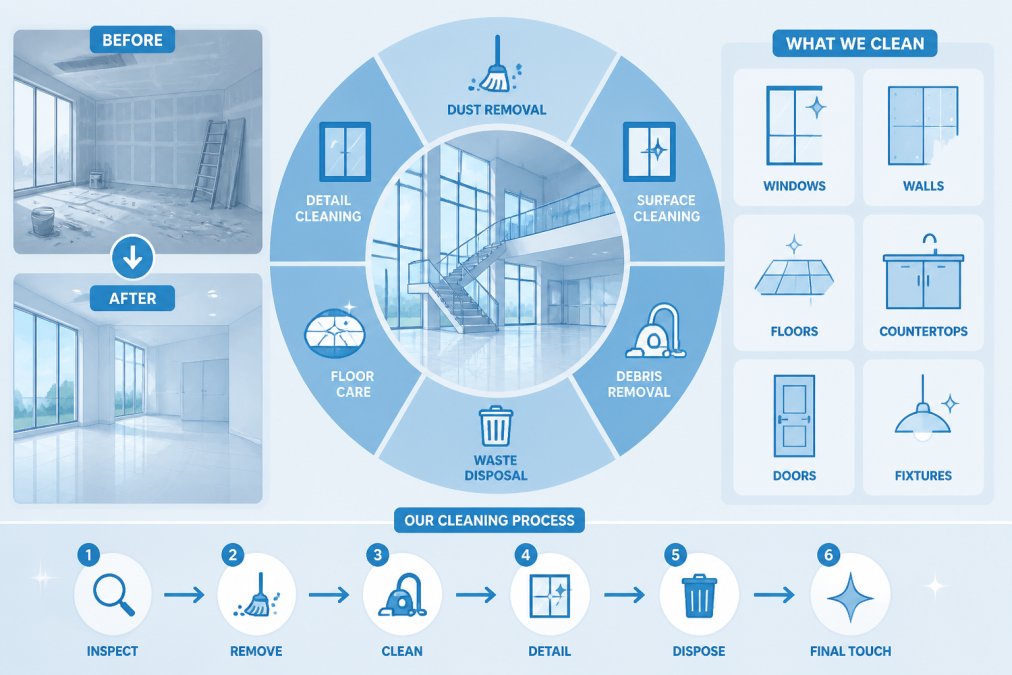
After construction cleaning is the comprehensive process of removing construction residue, debris, and fine dust from a property following renovation, new construction, or major building work. This specialized service addresses drywall dust, paint overspray, adhesive residue, and other materials that accumulate during construction projects. The goal is to transform a construction site into a move-in ready, occupancy-ready space through deep cleaning of all interior surfaces, floors, fixtures, and HVAC systems. Unlike regular maintenance cleaning, this service requires industrial vacuuming, pressure washing, and surface detailing to ensure the property meets safety and aesthetic standards before occupancy.
Why Professional After Construction Cleaning Matters
Construction work creates hazards that extend far beyond visible debris. Fine dust particles, particularly silica dust, pose serious health risks when left unaddressed. These microscopic particles remain suspended in the air and settle on surfaces long after construction ends, creating air quality issues that affect occupants for weeks.
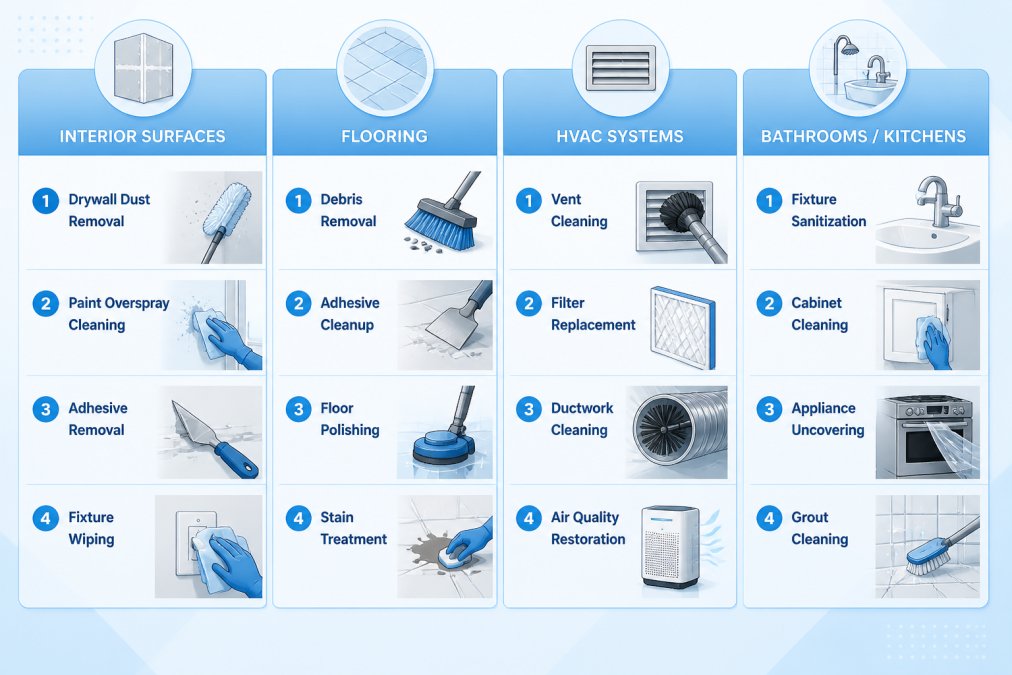
Professional after construction cleaning services protect your health, property, and timeline. Experienced cleaners understand construction-specific challenges: paint overspray on windows, adhesive residue on floors, drywall dust embedded in HVAC vents, and debris trapped in corners. They have the equipment, training, and knowledge to address each hazard safely and completely. Professional cleaning also preserves your property's condition and prevents damage from improper removal of construction materials.
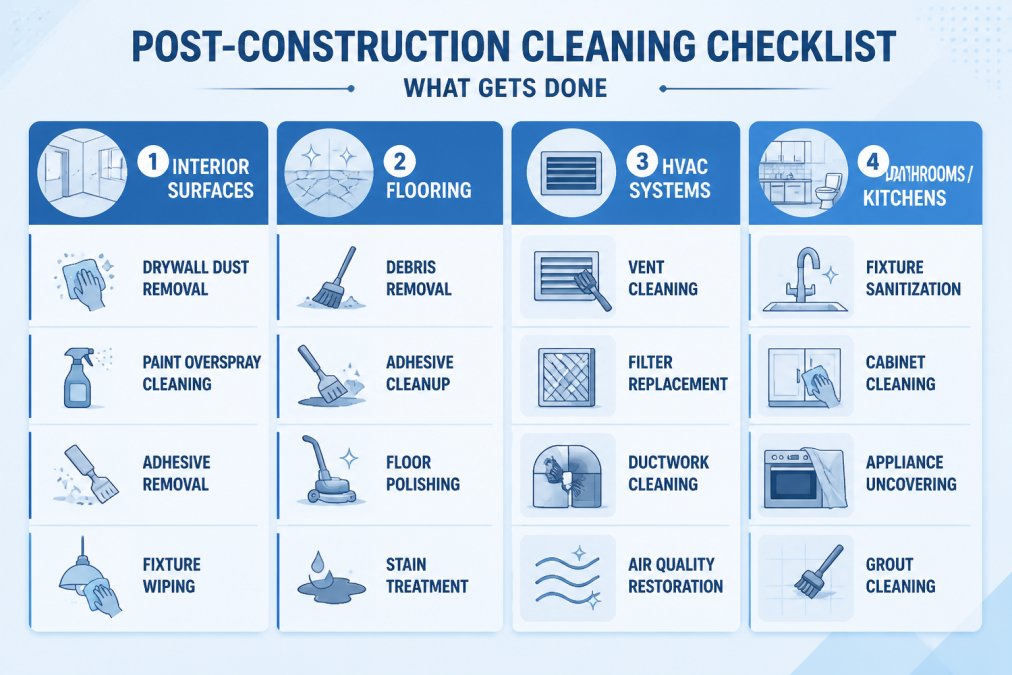
Post-Construction Cleaning Checklist: What Gets Done
A complete post-construction cleaning checklist covers every area affected by construction work:
Interior Surfaces & Walls:
- Remove drywall dust from all surfaces, baseboards, and trim
- Clean paint overspray from walls, windows, and fixtures
- Remove adhesive residue from flooring and wall applications
- Wipe down all light fixtures, switches, and outlet covers
- Clean interior glass and mirrors
Flooring:
- Vacuum all flooring thoroughly with industrial equipment
- Remove construction debris and adhesive from floors
- Polish or refinish floors as needed
- Clean grout lines and tile surfaces
HVAC & Air Quality:
- Clean HVAC vents and ductwork
- Replace or clean air filters
- Remove dust from ceiling vents and returns
Bathrooms & Kitchens:
- Sanitize all fixtures and surfaces
- Clean inside cabinets and drawers
- Remove protective coverings from appliances
- Polish countertops and sinks
- Clean tile and grout thoroughly
Final Detailing:
- Dust ceiling fans and light fixtures
- Clean door frames and doors
- Remove protective film from windows and surfaces
- Final walkthrough to ensure no spots missed
Dust Removal After Construction: Health and Safety
Construction dust is a legitimate health hazard. Silica dust, one of the most common byproducts of construction work, contains microscopic particles that lodge in the lungs when inhaled (the CDC). Prolonged exposure increases the risk of respiratory diseases, making proper dust removal a critical safety priority.
Fine dust particles settle on every surface and remain airborne for extended periods, accumulating in HVAC systems, carpets, and upholstered furniture. Without professional dust removal, these particles continue to circulate through the property for weeks after construction ends.
Professional after construction cleaning uses industrial-grade equipment specifically designed to capture and contain dust safely. HEPA-filtered vacuums capture particles as small as 0.3 microns, preventing them from being released back into the air (the EPA). Pressure washing and surface detailing remove embedded dust and residue that regular cleaning misses.
Post-Construction Cleaning Services Cost and Timeline
The cost of after construction cleaning depends on property size, scope of construction work, debris accumulation level, timeline for completion, and phased approach required. Professional pricing reflects the complexity of the project and the equipment and labor required to meet safety and occupancy standards.
Cost Factors & Pricing Structure: Property size is the primary cost driver. The scope of construction work also matters: a kitchen remodel generates different debris patterns than a full building renovation. Debris accumulation level, finish quality required, and whether the project includes hazardous materials all affect pricing. Most professional cleaning companies provide one clear price quoted upfront with no hidden fees after an initial site assessment.
Timeline & Phased Approach: Smaller residential projects typically require one to two days of work. Larger commercial facilities may require multiple phases spread over one to three weeks: rough cleanup during construction, first deep cleaning after major work is complete, and final detailing before occupancy. Phased cleaning prevents recontamination and improves final results.
Insurance & Bonding Requirements: When hiring an after construction cleaning provider, verify that the company carries general liability insurance and workers' compensation coverage. General liability insurance protects your property if the cleaning team accidentally damages surfaces during the cleaning process. Workers' compensation insurance protects the cleaning workers and shields you from liability if a worker is injured on your property. Ask for a Certificate of Insurance before work begins.
Some commercial cleaning providers carry performance bonds, which guarantee that the work will be completed to specification or the bonding company will cover remediation costs. Bonding is common for large commercial projects and government contracts.
Regulatory Compliance & Documentation: After construction cleaning must comply with Environmental Protection Agency (EPA) guidelines for dust control and waste disposal, particularly if the project involved lead paint, asbestos, or other hazardous materials (the EPA). For commercial projects, cleaning documentation, including before-and-after photos, air quality testing results, and completion certificates, may be required for final inspection or occupancy approval.
Scheduling & Budget Planning: Schedule your cleaning consultation early, even before construction ends. Professional cleaners can assess the scope of work, recommend a phased approach if needed, provide a detailed timeline, and quote a price that fits your budget. For commercial projects, factor cleaning costs into your overall project budget at the planning stage.
When to Schedule Your After Construction Cleaning
Timing is critical for effective after construction cleaning. A phased cleaning strategy that aligns with your construction timeline prevents dust recontamination and keeps your project on schedule.
Rough Cleanup Phase (During Active Construction): Schedule initial debris removal while major construction trades are still active, typically after framing, drywall installation, and before finishing trades begin. This phase removes large debris piles, drywall scraps, packaging materials, and excess dust. Rough cleanup prevents dust from settling on newly installed electrical, plumbing, and HVAC systems. Most projects benefit from rough cleanup scheduled after drywall mudding is complete but before primer and paint application begins.
First Deep Clean Phase (After Major Trades Complete): Once structural work, fixture installation, painting, and staining are finished, but before final trim, hardware installation, and appliance placement, schedule the first professional deep cleaning. This phase removes the bulk of construction residue before occupants or inspectors see the space. At this stage, all surfaces are accessible, HVAC systems are installed and can be properly cleaned, and you can address paint overspray and adhesive residue before final finishes go in.
Final Detailing Phase (3-5 Days Before Occupancy): Schedule final cleaning and detailing just days before move-in, final inspection, or certificate of occupancy review. By this point, all construction work should be complete and the property should be in its final state. Final detailing includes surface polishing, fixture cleaning, window washing, floor buffing, and a complete walkthrough to verify no spots were missed. This timing ensures the property passes final inspection in pristine condition.
Move-In Ready Inspection Checkpoint: Professional after construction cleaning prepares your property for final walkthrough inspections by code officials, lenders, or property managers. A property that has undergone professional phased cleaning passes inspection more reliably and and opens the door for immediate occupancy without delay.
Coordination with Construction Schedule: Work with your general contractor or project manager to align cleaning phases with the construction schedule. This coordination prevents schedule conflicts and ensures cleaning happens at the optimal moment in the construction lifecycle.
What to Expect From Professional After Construction Cleaning
When you hire a professional after construction cleaning company, you're investing in expertise, equipment, and accountability.
Initial Assessment: Your cleaning team will conduct a thorough site inspection to assess the scope of work, identify construction residue and debris patterns, and determine the timeline, equipment required, and phased approach that works best for your project.
Equipment & Preparation: Professional cleaners arrive with industrial-grade equipment: HEPA-filtered vacuums, pressure washers, specialized tools, and commercial-grade cleaning solutions. They'll protect areas that don't need cleaning and prepare the workspace for efficient, safe removal of construction debris and dust.
Systematic Cleaning Process: Work proceeds systematically from top to bottom, starting with ceiling vents and light fixtures, moving to walls and surfaces, then floors last. This prevents dust from settling on already-cleaned areas.
Quality Assurance & Final Walkthrough: Professional teams conduct a final walkthrough with you to verify all areas meet standards. They document completion and address any touch-ups before considering the job finished.
Ongoing Communication: Clear communication and respect for your property throughout the process ensures you know the schedule, understand what's being done, and have confidence that your property is in capable hands.
Conclusion
After construction cleaning transforms a construction site into a safe, clean, occupancy-ready space. Professional after construction cleaning services address health hazards, remove construction residue and fine dust, and prepare your property for immediate use. The process requires specialized equipment, expertise, and a phased approach that DIY methods cannot replicate.
El Rey Cleaning Services has helped homeowners and businesses in the area move into spotless properties by handling every phase of after construction cleaning, from rough cleanup during work to final detailing before occupancy. Our family-owned team provides reliable, thorough service with one clear price quoted upfront and no hidden fees. Call for a free estimate today and discover how professional cleaning can save you time and deliver the move-in ready results you deserve.
Frequently Asked Questions
Q: What is included in a professional after construction cleaning service?
A: Professional after construction cleaning covers debris removal, fine dust cleanup from all surfaces, drywall dust mitigation, paint overspray removal, adhesive residue cleaning, HVAC vent and system cleaning, floor polishing, sanitization of fixtures, and final surface detailing. The scope depends on your specific project, but a thorough service ensures your space is occupancy ready.
Q: How much does after construction cleaning cost?
A: Post-construction cleaning services cost varies based on project size, the extent of construction residue, facility type (residential or commercial), and the depth of cleaning required. Pricing depends on quantity, dates, and your specific needs. Contact El Rey Cleaning Services for a free estimate tailored to your project scope and timeline.
Q: Why is specialized dust removal after construction necessary?
A: Construction dust, particularly silica dust from drywall and concrete cutting, poses serious health risks including respiratory issues and long-term lung damage. Standard cleaning cannot capture fine dust particles that settle in HVAC systems and hidden areas. Professional dust removal uses industrial vacuuming and air quality restoration to eliminate harmful particles and ensure a safe, healthy environment before occupancy.
Q: How long does after construction cleaning typically take?
A: Timeline depends on project size and scope. Small residential projects may take one to two days, while larger commercial facilities or extensive renovations can require several days or multiple phases. A phased cleaning approach, rough cleanup during construction, first cleaning after major work, and final detailing before move-in, ensures thorough results and minimizes disruption to your schedule.
This article was written using GrandRanker
Frequently Asked Questions
Q: What is included in a professional after construction cleaning service?
A: Professional after construction cleaning covers debris removal, fine dust cleanup from all surfaces, drywall dust mitigation, paint overspray removal, adhesive residue cleaning, HVAC vent and system cleaning, floor polishing, sanitization of fixtures, and final surface detailing. The scope depends on your specific project, but a thorough service ensures your space is occupancy ready.
Q: How much does after construction cleaning cost?
A: Post-construction cleaning services cost varies based on project size, the extent of construction residue, facility type (residential or commercial), and the depth of cleaning required. Pricing depends on quantity, dates, and your specific needs. Contact El Rey Cleaning Services for a free estimate tailored to your project scope and timeline.
Q: Why is specialized dust removal after construction necessary?
A: Construction dust, particularly silica dust from drywall and concrete cutting, poses serious health risks including respiratory issues and long-term lung damage. Standard cleaning cannot capture fine dust particles that settle in HVAC systems and hidden areas. Professional dust removal uses industrial vacuuming and air quality restoration to eliminate harmful particles and ensure a safe, healthy environment before occupancy.
Q: How long does after construction cleaning typically take?
A: Timeline depends on project size and scope. Small residential projects may take one to two days, while larger commercial facilities or extensive renovations can require several days or multiple phases. A phased cleaning approach—rough cleanup during construction, first cleaning after major work, and final detailing before move-in—ensures thorough results and minimizes disruption to your schedule.